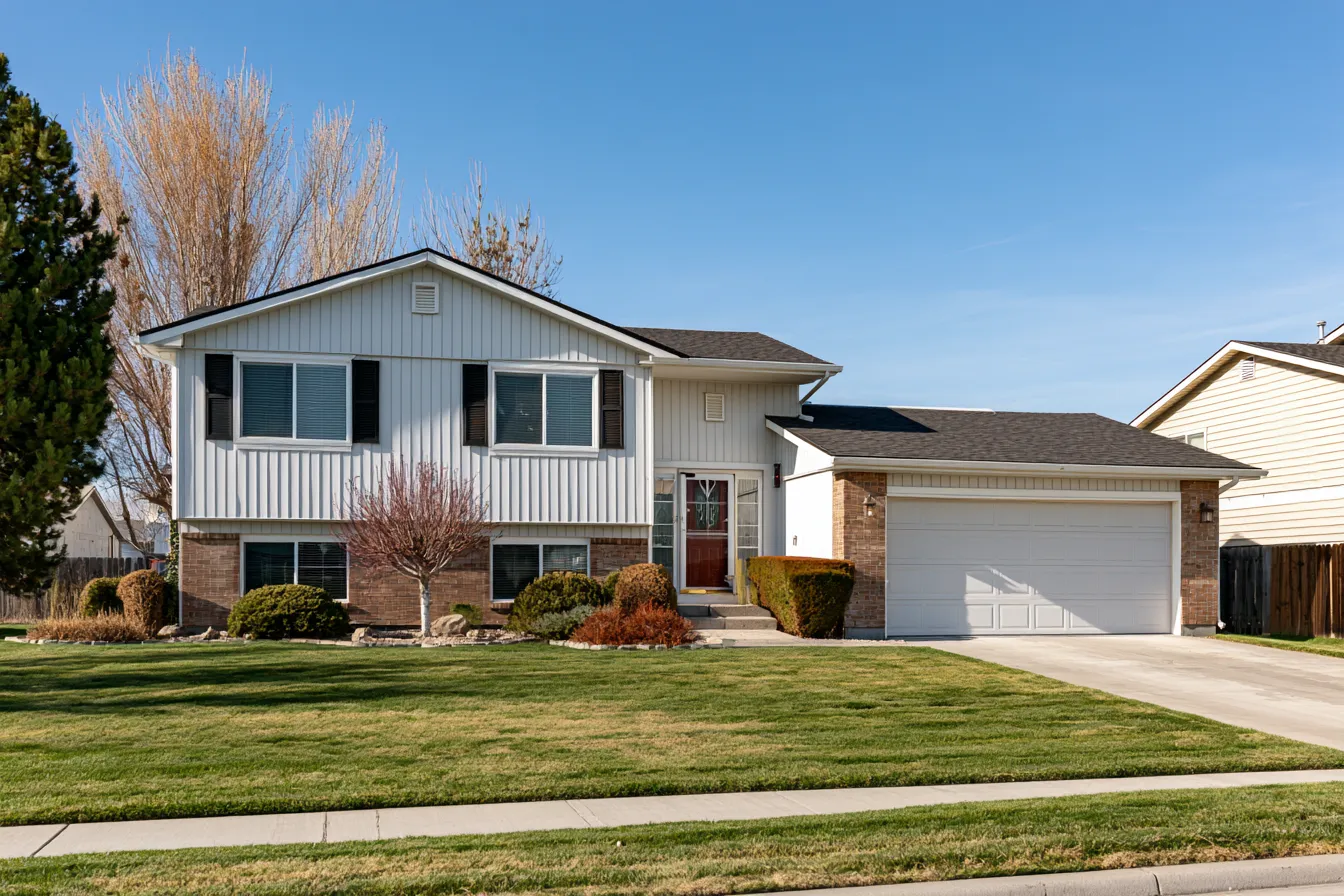
Coppell put its current building codes in force on May 1, 2025: the 2024 residential and building editions. The typical house in this city dates to 1994. So the rulebook a new Coppell roof answers to is about thirty years newer than the roof it replaces, and if somebody has knocked on your door since a storm, there is a fair chance they mentioned it.
The gap does not make your roof unlawful
A code edition governs work. When Coppell adopted the 2024 editions, no roof already sitting on a house in town changed status that morning. A covering installed under the rules of 1994 stays lawful for as long as it stays up there, and the city has no interest in a roof that is keeping water out.
The edition arrives the day a permit does. A full tear-off is permit work in nearly every city in this metro, and from that point the roof going back on answers to the 2024 book whatever the one underneath it was built to. That is the entire mechanism. If the word code turns up in a driveway conversation as a reason your standing roof is out of compliance, the Coppell building department will answer it for the price of a phone call.
What the inspector is looking at
The list is shorter and less mysterious than the word suggests. With the old covering off, an inspection looks at the decking, whether old layers came off where they had to, the metal drip edge along the eaves and rakes, the underlayment, the flashing at chimneys and walls and valleys, how the shingles are fastened, and whether the attic has enough intake and exhaust to breathe.
Every item there decides how long a roof lasts. Drip edge stops water wicking back into the fascia. Fastening decides whether tabs hold through a May gust. Ventilation decides whether the deck bakes from underneath for the next twenty years. When those lines show up on an itemized bid they are the baseline of the job, and a bid that has quietly left one of them out is not the cheaper one.
Where the gap turns up on your bid
Two quotes on the same 1990s Coppell house can land a long way apart, and often enough one of them has priced the roof the inspector signs off while the other priced the roof that came off. Decking is the usual reason. Nobody knows how many soft sheets are up there until the covering is stripped, so a roofer quotes it as a rate per sheet with the count to follow, and a bid carrying no line for it is unfinished.
The permit fee belongs on the bid from the start too. Coppell sets its own fee schedule, so ask what it comes to and ask whether it is already inside the number you were handed, then put both answers beside the other bid. What roofing costs in Coppell takes the covering tiers one at a time, and roof replacement sets out what the job includes.
Three questions for the driveway
If code comes up while somebody is standing in your driveway, three questions clear most of the fog. Which edition does Coppell enforce, and since when. Is the permit fee inside the number you just handed me. And what on this roof, specifically, are you saying falls short of it.
A roofer who pulls the permit, posts it and meets the inspector is a roofer expecting to pass. An offer to skip it is an offer to skip the independent look that exists for your benefit, and the cost of that turns up years later at a sale or on a claim. If none of this has been settled on your own roof yet, a roof inspection is where the answer starts. Coppell Elite Roofing is the door to it, and the rest of the conversation is yours.