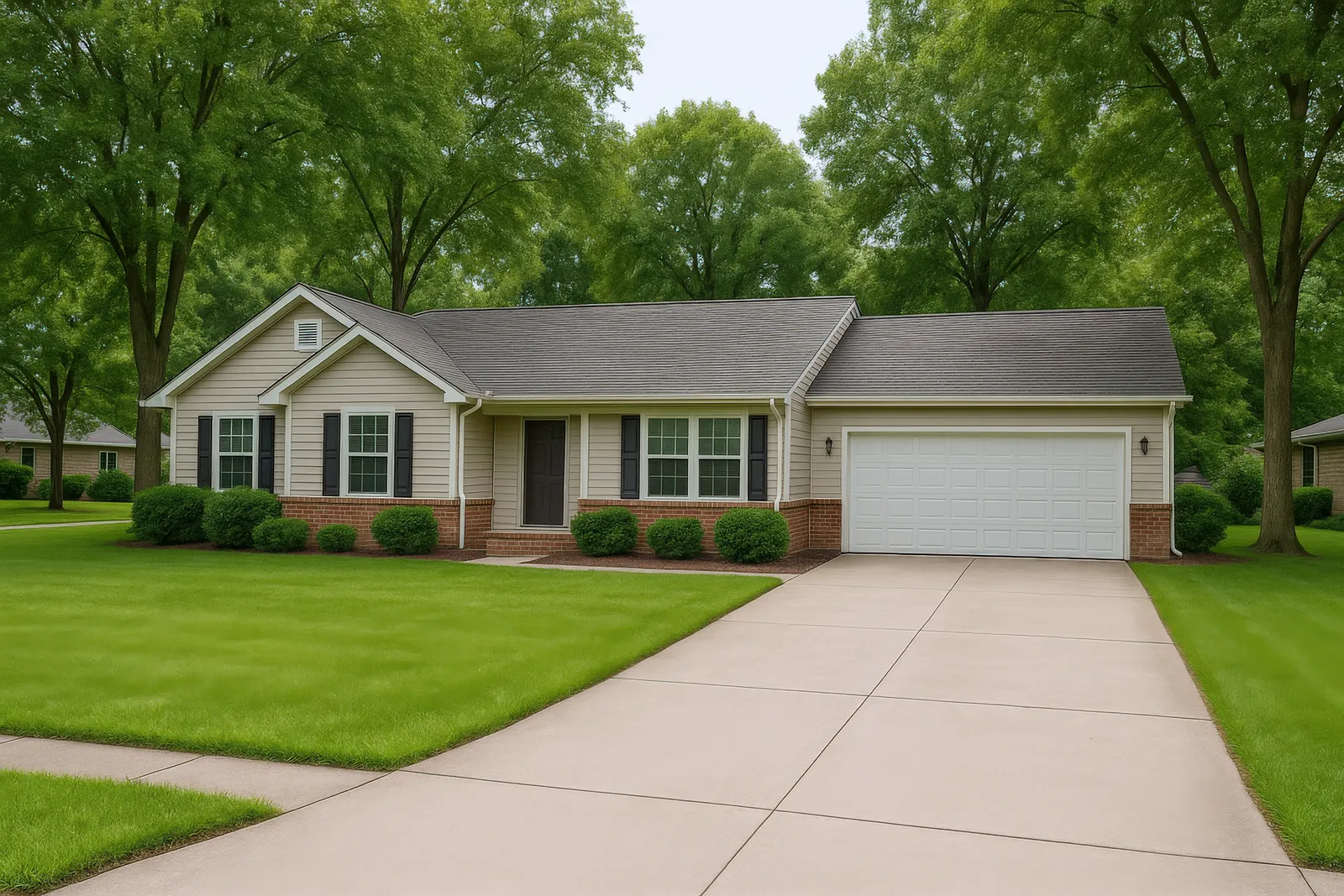
Roof Insurance Claims in Coppell, TX
A roof insurance claim in Coppell, TX is decided on evidence gathered before the adjuster arrives, and our roofers photograph the slopes while it still counts.
Most claims turn on two numbers: your deductible and the storm date. Knowing both before you file decides whether it is worth opening.
Roofing you can see for yourself
Cash value against replacement cost
Your policy is one or the other, and it says which on the declarations page. The difference shows up as one check or two.
Actual cash value (ACV)
Actual cash value is what the roof was worth the day it was damaged: replacement cost minus depreciation for its age and condition. On an ACV policy the carrier pays that figure, minus your deductible, and the depreciation is gone for good.
On a fifteen-year-old roof that can come to a fraction of replacement cost, which is why the age of the roof moves the payout as much as the size of the damage does.
Replacement cost value (RCV)
Replacement cost value pays what it costs to put back a roof of like kind and quality at today's prices. It arrives in two parts: a first check for the depreciated amount, then the withheld depreciation released once the work is done.
That second check is the one people leave behind. It is only released after the roof has been replaced and the completion paperwork is in, so stopping short at that stage forfeits money the carrier had already approved.
Which one you carry is on your declarations page, under the dwelling coverage.
A roof insurance claim in Coppell, step by step
The sequence below runs much the same at most carriers, and every stage of it has an owner.
The homeowner files. The carrier assigns an adjuster. A roofer documents the roof, and can be there when the adjuster comes if you arrange that directly with them. Those roles do not swap around, and knowing which one is yours saves a lot of confusion later on.
Damage documentation
Photographs of the roof, the attic and any interior staining, dated, taken before anything is repaired. This is the record every later stage argues from, and it is the one part that cannot be recreated after a repair.
Policy read-through
You confirm whether the policy pays cash value or replacement cost, what the wind and hail deductible is, and what the notice window says. Ten minutes on the declarations page changes what you expect from the first check.
The claim call
You call your carrier and open the claim, and you come away with a claim number and a list of what they want. Nobody else can do this for you, and nobody else should be asking to.
The adjuster visit
The carrier sends an adjuster out to inspect and price the loss. A roofer being on the roof at the same time is normal and useful, because the two of them can look at the same bruise and agree on what it is.
The carrier estimate
The adjuster prices the loss and the carrier issues its decision. A roofer's own estimate sits next to it, item for item, so any gap between the two is visible instead of assumed.
Supplements and final invoice
Items the first estimate missed, code-required pieces and undervalued labor go back to the carrier as a supplement, with photographs and measurements attached. At the end, the final invoice and proof of completion release the withheld depreciation on an RCV policy.
From first photo to the adjuster visit
A different person owns each stage of this.
You photograph
Wide shots of each slope from the ground, close-ups of anything dented, and the ceiling or attic if water came in. Date-stamped by the phone, taken before a tarp or a repair changes what the roof looks like.
You call the carrier
The claim is yours to open, and that call gets you a claim number and a date for the adjuster. Ask what the deductible is and whether the policy is cash value or replacement cost while you have the carrier on the line.
A roofer documents the roof
A roofer gets on the slopes, counts the hits, photographs the flashing and the soft metal, and writes it up. That documentation is yours to use, and your claim stays yours to run from start to finish.
The adjuster comes out
The carrier's adjuster inspects and prices the damage. Roofers commonly ask to be up there at the same time, and where that is arranged directly with them the two can agree what they are looking at instead of trading email a week later.
What a carrier looks for on a Coppell roof
An adjuster is answering two questions: is the damage functional, and did a storm cause it. Both have to pass. A roof inspection before the visit tells you what is up there before anyone else prices it.
Hits fall randomly
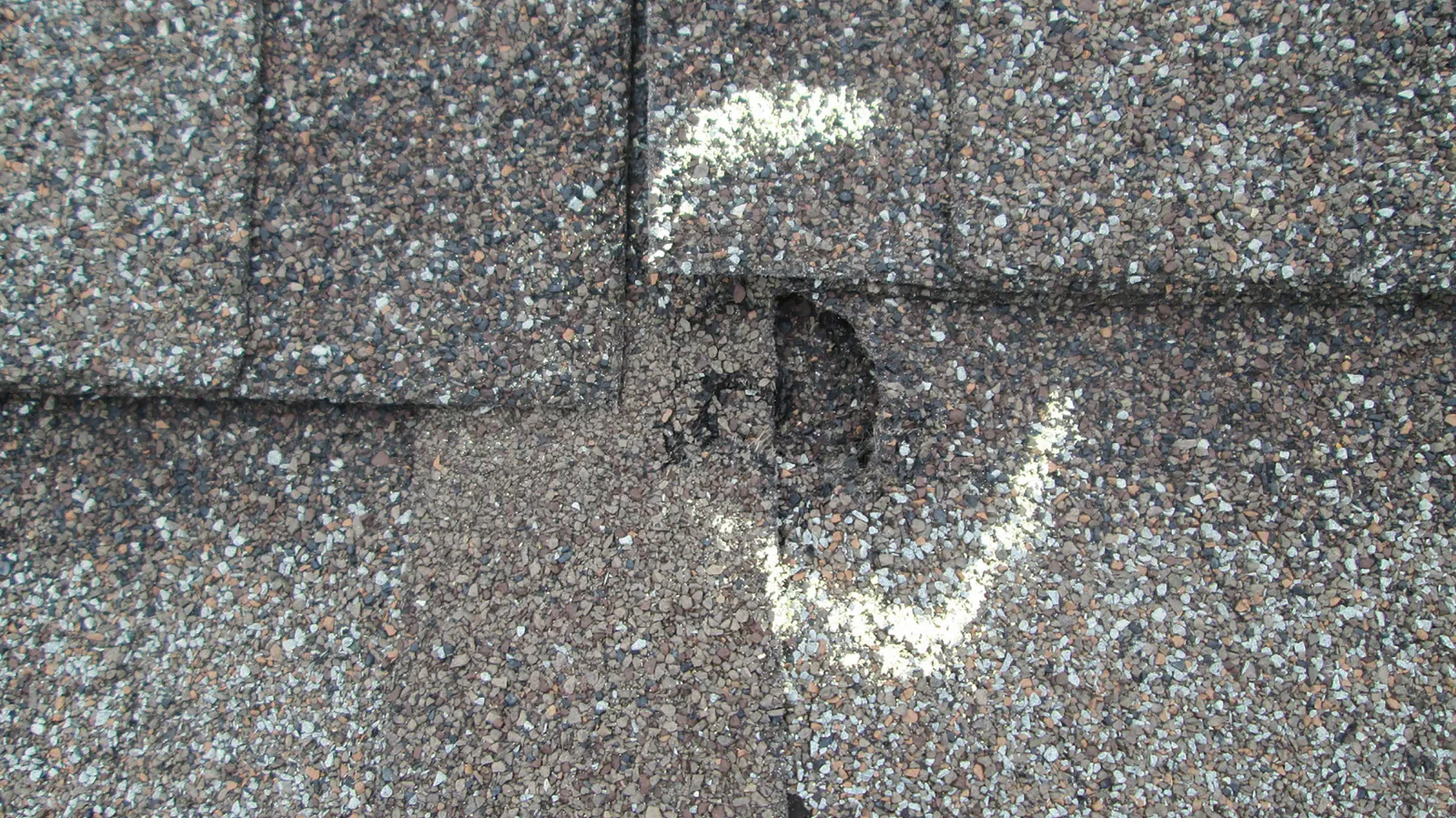
Hail impacts scatter with no pattern, and an adjuster counts them inside a marked square on each slope. A row of identical marks in a straight line reads as foot traffic or a manufacturing fault, and it does not count.
The mat gives under a thumb
A bruise is a fracture in the fiberglass mat under the granules, and it feels soft where the roof around it is firm. That softness is the difference between cosmetic and functional, and functional is what most policies pay for.
Soft metal carries dents
Vents, valley metal, gutters and the chimney cap dent at hail sizes that shingles shrug off. Undamaged soft metal beside claimed shingle damage is the first thing that makes an adjuster doubt the date.
Granule loss exposes the mat
Scattered granule loss is normal wear; loss that leaves black asphalt showing is a different matter. Bare mat bakes in the sun and ages fast, so exposed asphalt counts as damage where a thin patch does not.
Creases mark wind damage
A horizontal line across a shingle where it lifted and folded back is a wind tell, and it is a different mechanism from bruising. Both can sit on one roof after the same storm, and an adjuster prices them separately.
The date has to match
An adjuster checks the damage against a storm on record for your street, which is why a dated photograph from the week of the storm carries weight. Damage that cannot be tied to a covered event ends up filed as wear.
Claim questions that come up every storm
General information only. Your own policy is the document that governs.
Start the Coppell claim with real evidence
Coppell Elite Roofing can put the evidence together: photographs, measurements and an itemized estimate, all at no charge. Whether you file is your call, and whether a claim is worth opening at all usually turns on your deductible.
Roofing you can see for yourself