
Commercial Roofing in Coppell, TX
Commercial roofing in Coppell, TX is mostly low-slope work: warehouse and distribution buildings, flat membrane, and drainage that has to be designed into the roof. For a building owner the first two questions are which system is up there, and who can authorize access to it.
TPO, EPDM, modified bitumen and coatings, the drainage assessed as one system, and the hours your building can afford to give up.
Roofing you can see for yourself
Commercial roofing in Coppell, TX
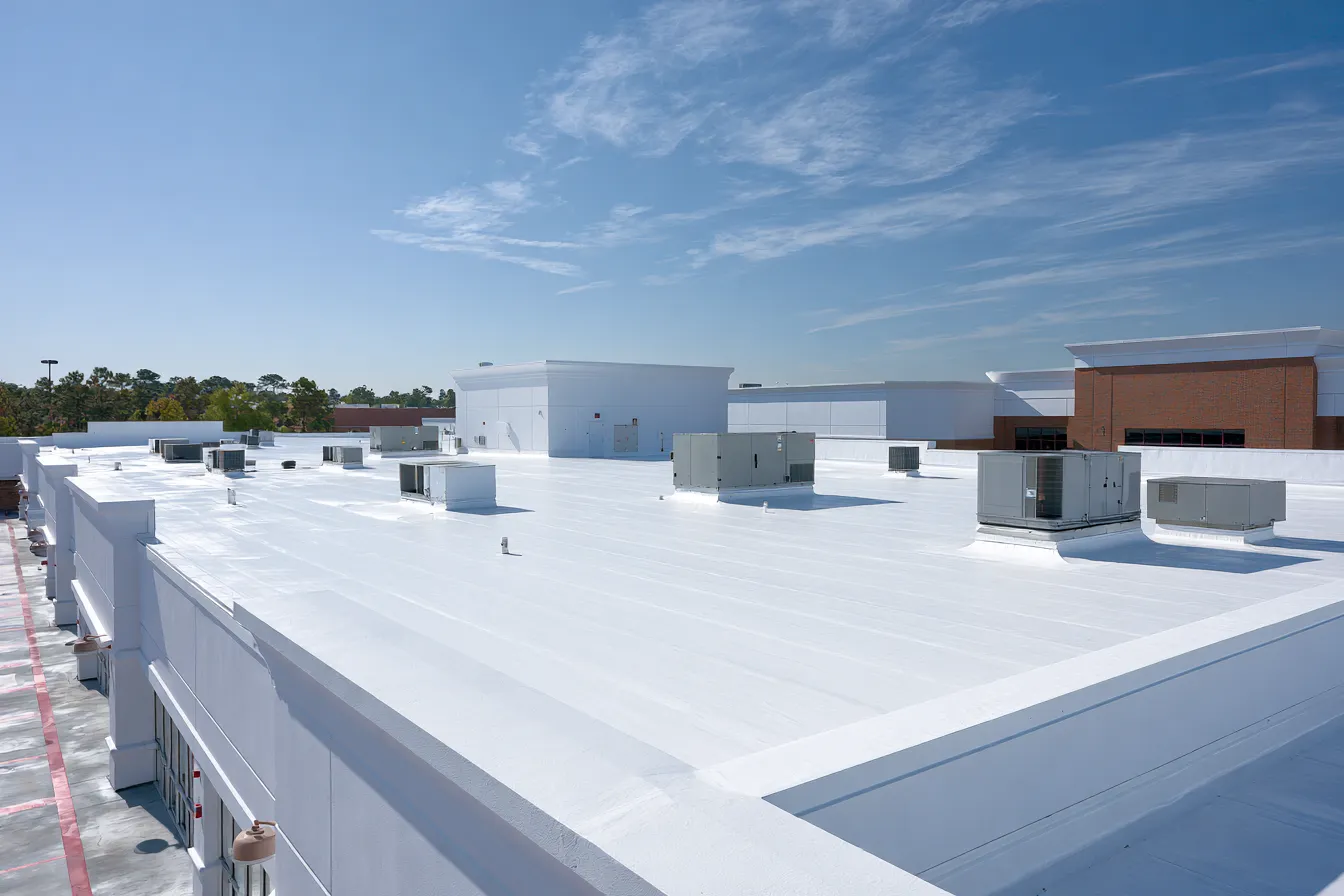
Part of an international airport sits inside Coppell's own city limits, and the freight economy around it is what most commercial roofing here covers: distribution boxes, flex space and offices carrying acres of near-level membrane under a great deal of equipment.
Those roofs fail at their joints and their low spots. A membrane's open field outlasts its seams, curbs, parapet flashings and drains by years, which is why a survey counts penetrations before it measures square footage. Hail marks a membrane much as it marks shingles, only far less visibly from the ground. Most of what follows is low-slope repair.
What a Coppell commercial scope covers
A commercial proposal is a document about the whole roof before it is a price for a square. The survey behind it covers the six below, and a proposal missing any of them is a proposal you cannot put beside another one. A roofer walking it is where that survey starts.
The system on the deck
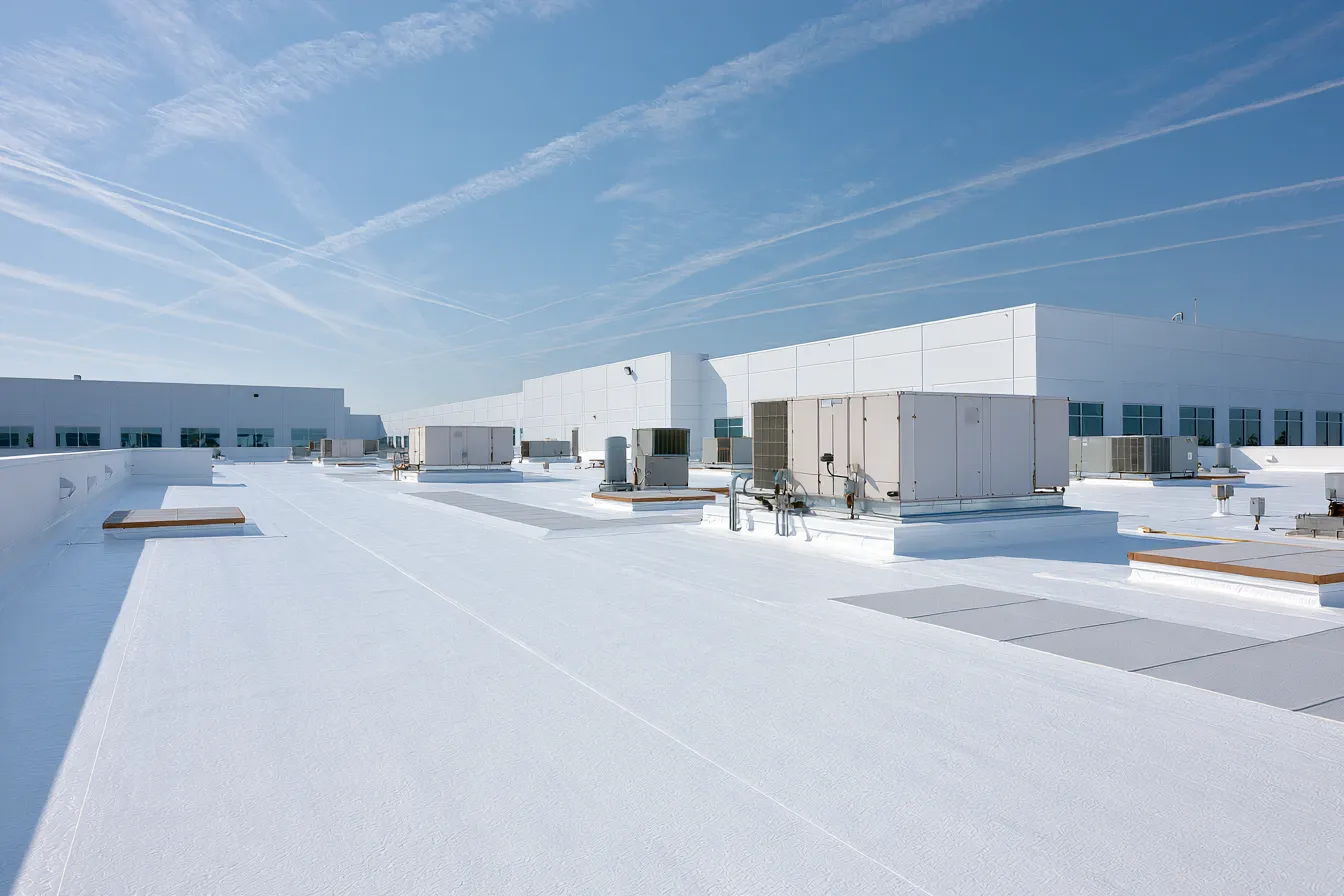
What is up there now, how many plies or membranes, and whether it is adhered, mechanically fastened or ballasted. That determines whether the roof can be recovered or has to come off, which is the largest single number in the job.
Core cuts and moisture
Test cuts through the assembly, and on larger roofs an infrared or capacitance survey, to find where insulation has taken water. Wet insulation is invisible from the surface and it is the whole difference between a restoration and a tear-off.
Drainage assessed as one system
Primary drains, scuppers, overflows and the slope feeding them, looked at together instead of drain by drain. Code expects the roof to survive its primary drains clogging, so the overflow path is part of the survey and never an afterthought.
Every curb and penetration counted
HVAC curbs, exhaust fans, conduit, gas lines, skylights and pipe penetrations counted and photographed one at a time. Each is a flashing detail carrying its own cost, and this count is where two proposals stop matching each other.
Edges, parapets and uplift
Perimeter and corner attachment, coping, counterflashing and the condition of the parapet, because wind loads concentrate at the edges and that is where a membrane peels first. Attachment patterns are deliberately heavier at the perimeter for the same reason.
Warranty routes and access
Which manufacturer system warranties the roof qualifies for, and what the installing roofer covers on the work itself, are two separate documents with different lengths. Both are named in the proposal alongside the access, hours and staging the job assumes.
TPO, EPDM and coatings compared
Four systems cover nearly every low-slope roof in this city. What separates them is slope, what runs on the roof, and how many more years the building has to stay yours.
| System | Typical service life | What it is | Where it fits |
|---|---|---|---|
| TPO | 20 to 30 years | A heat-welded thermoplastic sheet, usually white | Most low-slope buildings; the reflective surface cuts rooftop heat |
| EPDM | 20 to 30 years | A synthetic rubber sheet, classically black | Long track record; the seams are the part to watch |
| Modified bitumen | 15 to 20 years | Asphalt in reinforced rolls, applied in layers | Smaller low-slope roofs and anywhere foot traffic is heavy |
| Coating or restoration | 10 to 20 years added | A fluid-applied silicone or acrylic layer over a sound roof | A dry, intact roof with life left in it; never a wet one |
Service lives are ranges and depend heavily on installation quality and upkeep. A wet or failing roof underneath rules a coating out whatever the surface looks like.
Access, hours and how the work phases
Access and phasing are agreed with you before the first load of material arrives. That agreement is what sets the calendar, because no section is opened wider than what can be closed before the building is left overnight.
The survey
A roofer walks the roof, takes cores, counts penetrations and photographs conditions, then puts the findings and the options into one proposal. On an occupied building this is also where the access route, the crane or hoist position and the staging area get worked out.
Access and hours
You set which hours the building can give up and which areas have to stay open, and the phasing is built around that instead of the other way round. Kitchens, data rooms and clean areas dictate where work cannot happen while they are running.
Phased tear-off and dry-in
The roof is taken in sections small enough to open and close within the same working period, so no part of the building is left exposed overnight. That constraint sets how long a commercial job takes far more than the size of the roof does.
Detailing, then the handover
Curbs, drains, edges and parapets are flashed last and inspected against the manufacturer's requirements for whichever warranty the roof is going for. You get the closeout package: the warranty documents, the as-built details and photographs of the assembly before it was covered.
What Coppell building owners ask
What building owners and facility managers in Coppell ask before they hand a roof over. Two are about the capital line and the rest are about keeping a building running while a roof comes off.
Scope a Coppell commercial roof
Send the roof age, the building's ZIP and roughly what is sitting on the deck. Our commercial roofers in Coppell can survey it.
Roofing you can see for yourself